Showing posts with label OSR. Show all posts

02 November 2016

Elementary, my dear Watson!

Well, it has been a while, but I'm ready to jump back into writing in my blog. It's been a long summer, but we're ready to go!


Now, as for this entry, I've recently made a decision that when I start any new Dungeon & Dragons campaigns in the future, I will use either Swords & Wizardry Complete (SW&C) or a Holmesian clone I found a few tears ago titled Dungeons & Dragons Holmes Reformatted (more on that later).  The reason is simplicity itself. The older I get, the less time I want to spend working on minutiae; even Fifth Edition, which is a breeze to run, has many fiddly bits. For instance, monster have huge stat blocks with detailed powers and attacks. I am left with one of two alternatives: first, I can just use monsters found in published modules or the Monster Manual (boring) or, second, I can detail out all the monsters myself and make them unique to the adventure I'm designing (time-consuming). I do not have to do that with earlier editions and especially not in anything close to OD&D like S&WC or Holmes Reformatted (hereafter HR).


If I do need more monsters, I can easily use the AD&D Monster Manual. As is regularly pointed out by the cast of the Save Or Die! Podcast, the Monster Manual was published around the same time as the Holmes edition (1977) and was the first of the AD&D Core Rules to see the light of day. As the system was not quite set in stone, there are many Holmes and OD&Disms in its text. For instance, base AC is 9, there still appears to be a 3- or 5-point alignment system in use, and a couple of others. It's definitely easily compatible with Holmes as it stands. I can also lean on Rafael Chandler's Teratic Tome (which has some truly terrifying creations in its pages) and New Big Dragon's CC1 Creature Compendium. that's really all I need; and creature creation is simple enough in the early games; a quick and easy stat block and I'm done.

"Why Swords & Wizardry Complete, then?" I hear you ask. That's another simple one. For years I have dreamed about getting Isungr Games off the ground and publishing through RPGNow my on line of PDF and POD adventures. I can contribute to the mass of stuff out there in a good way. The ultimate goal is to publish my campaign world, the one that I've been working on since 1986 when I started scribbling out the political and continental map in Mr. Stemper's World History class. I want it to be a 128-page hardcover with map similar to the AD&D Dragonlance book; that is my dream anyway. 


"Ok, so what about this Holmes clone you mentioned? How does that fit in?" I have recently fallen in love with Holmesian D&D. I never had the chance to play when I was younger, but I do remember perusing the open boxed set at my local Kroger's grocery tore when I was 8 or 9 and being entranced. I like the simplicity of the system--there's much in the way of "What if?" floating around in my head about what if there had been no Moldvay and Holmes had continued.

Enter 2010 or -11 when I came across D&D Holmes Revised. Written anonymously by "The Reviser," this project extrapolates what might have been using Holmes's notes and postings on the Zenopus Archives. This fits the bill nicely and might well be the ruleset that I use in the future. The one thing that would keep me from using it exclusively is the fact that I do want to become a S&WC author. Also, while S&WC is actually an OD&D emulator that consists of the LBBs + Supplements, it plays like how I and my friends played AD&D back in middle school in the early 1980s; we ignored the complex AD&D initiative, speed factors, weapon length, bonuses/penalties to hit due to AC, etc. So, there is that nostalgia factor working overtime as well.


Some might question why I don't use Mazes & Perils. Well, the authors themselves admit that there is much from AD&D blended in as well. Whenever I want that fictional Holmes Expanded version, well, I have to agree with the Reviser:

"The various Holmes expansions borrow from a variety of sources, from the original game through to 1st Edition AD&D, and in one case even 3rd Edition D&D, but none have attempted to faithfully follow the path that Holmes himself trod by using only the same source material, without the "taint" of house rules....Having said that, this document is more than just a reformat of the original rulebook, and more than just an expansion of the rules, it is also a revision of those rules. Quite a few changes were made by TSR to the Holmes rulebook between its first print in 1977 and its third edition in December 1979. Thanks to the wonderful detective work of "Zenopus76" in his article List of Changes Made to the Holmes Rulebook (1st/3rd)*, we have a detailed list of these changes. Working from that article I have revised this document to include various weapons, monsters and magic items mentioned in the rulebook but lacking detail, as well as text missing from one print to the next."

And there it is. Such are my thoughts. Now, if I can only keep writing....

02 April 2014

B is for Bob


. . . .and not just any Bob but Bob Bledsaw!

One of the most heated debates in the OSR is who the true Father of Dungeons and Dragons truly is. Is it Gygax or Arneson? The thing that always disturbs me about this is that Bledsaw gets ignored quite a bit it seems. I realize, of course, that he's not in the running for Father, but (no offense to Rob or Ernie or Luke) I feel he deserves the title  First Son of Role-playing. Why, you ask?

1975, not long after D&D was released, Bledsaw created the Judges Guild. Now, that doesn't seem like a lot today with all the gaming companies out there in the wake of the OGL, but at the time, it was revolutionary. He was a man of vision. Judges Guild received permission from TSR to put out adventures and other supplements for D&D. TSR would not put out an adventure module until 1978! Even then, if reports are to be believed from those in the know, Gary was somewhat bewildered as to why people would want to use prepared adventures rather than create their own.

Another good thing was that JG added some organization to the mess. If one plays 0E today, there is no resource more valuable than JG's Ready Ref Sheets. Some collected charts, sure, but the majority was new material for the Judge to use in making his campaign come to life. And the adventures, maps, and settings! Wilderlands, the City-State, Thracia, Duck Tower! Both Kevin Siembieda and Jennell Jacquays started out with JG as well. Imagine what we would have lost without Bledsaw. Don't get me wrong; I love me some Hommlett and some B2. But JG's adventures are somehow better. Much as I love Gary, part of the creativity was channeled into balance and polish leading to what WOTC and Hasbro have become--souless.

And, as an aside, CSIO is coming back. Please support the Kickstarter here.

Until tomorrow, gentle readers, dream of troublesome strumpets in the City-State!

01 April 2014

2014 A-to-Z Blogging Challenge


Well, here we are again; time for another Challenge. I've done this twice: once in 2011 and again in 2013. And, as much as I've wanted variety, I'm doing fantasy yet again! This year I'm going to focus on Swords and Wizardry Complete by Frog God Games the successors to Necromancer Games.

In last year's challenge, I might have come across as too harsh on the OSR in general and retro-clones in particular. However, as I later posted in "E is for Editions," I don't really have much of a beef with retro-clones but in their marketing and presentation. Besides, how can anyone say something bad about a company that gives their core rules away for free? Definitely not a money grab.

When I get home tonight, I'll post my first blog that, while serious in content, is somewhat of an April Fool's post. E

Until later later, gentle readers, do not confused by today's news stories! 

28 June 2013

Fantasy Friday: Blueholme

Well, there's another retro-clone out there I'm waiting on: Blueholme. I'm interested in it partly because I just recently read J. Eric Holmes's novel The Maze of Peril and partly because I'm always on the lookout for a simple "D&D" rules system. While my first iteration of D&D to play was B/X Moldvey, I was vaguely familiar with the Holmes version prior to that. There was a copy or two on the games aisle of our local Kroger's grocery store, one of which was open. I could never convince my parents to buy it for me, but I leafed through as often as I could at the store. So, I remember Stone Mountain and the five alignment system graph, and the art even though I never actually played it. Personally, I was always interested in that Domed City on the 7th level and the older me wonders if it has any connection to The Maze of Peril.
 
 
Holmes D&D gets some love from a small but fanatical fanbase; GM Liz of the Save or Die! podcast comes to mind. But there are problems. First, Holmes goes no higher than 3rd level; that's really not conducive to long-term play. Second, there are some oddities that are not really found in earlier or later editions such as the aforementioned FIVE alignment system: LG, CG, LE, CE and N. Or how about the rule that a surprised PC has a chance of dropping whatever's in his hands? Initiative determined by dexterity score EVEN FOR MONSTERS! Third, there's the problem that even B/X suffered from: TSR's marketing changed more rapidly than design and publishing schedules. For example, B/X was supposed to have a Companion book. That volume was scrapped when the decision was made to produce Mentzer's BECMI.
 
So, why the fascination with Holmes D&D, especially if it's "incomplete?" Well, as a transitional/gateway game, it is not tied to concepts that we now take for granted. It's much more flexible. As for the level limitations, that's what the Blueholme project is supposed to address: taking that minimalist ruleset and expanding it out to 14th level. And part of it is also that the older I get, the less I care about detailed rules, much as I like games such as GURPS, Champions, and even AD&D. Let's roll some characters and sling some dice around--I've got some orcs to kill So, yes, I'm definitely looking forward to this game,
 
Until Monday, gentle readers!

27 April 2013

X is for Xylophone


Xylophone: a weird looking instrument that really doesn't fit into any other category; it usually gets lumped in with percussion although it is not a percussion instrument. I'm using it here as an example of something that is out of place and does not belong. "How does that apply to AD&D?" you ask.

The PHB (p. 118) states the following concerning bards: "He or she must always have a stringed instrument." Note that it specifies a "stringed instrument." I bring this up as an example of the differences between 0E and 1E. As I've read different blogs of the OSR over the past month, I've noticed the fact that the pre-AD&D rules were truly more of a set of guidelines; AD&D was more structure and more defined, maybe excessively so. Gary did intend for AD&D to be the "tournament ruleset" that clearly defined gameplay so people at conventions would have the same base from which to play and interact. "Dictums are given for the sake of the game only, for if ADVANCED DUNGEONS & DRAGONS is to survive and grow, it must have some degree of uniformity, a familiarity of method and procedure from campaign to campaign within the whole. ADVANCED D&D is more than a framework around which individual DMs construct their respective milieux, it is above all a set of boundaries for all of the "worlds" devised by referees everywhere. These boundaries are broad and spacious, and there are numerous areas where they are so vague and amorphous as to make them nearly nonexistent, but they are there nonetheless." (Gary Gygax, "Preface," DMG, p. 7)

"More like a set of guidelines, really."
"Basic" D&D, both B/X and the later BECMI were not really intended to be "gateway" games; they were the continuation of 0E as the ruleset for causal home games. AS the blurb on the back of the Moldvey Basic set says, "The rules have been reedited and organized so that people who have never played the game before will be able to begin playing with a minimum amount of preparation. The entire family will enjoy a Dungeons and Dragons adventure." If B/X was intended as a "gateway" game, it would have remained organized as Holmes D&D was: a limited amount of levels. B/X was to have been a complete game in its own right designed for new and casual gamers. It was never completed as such because the rebranding of  TSR created Mentzer's BECMI and it is definitely a complete game! It even goes into realms that AD&D never really did: PCs aspiring to deity status!

And thus, the humble xylophone. Playing strictly by the rules, as AD&D was intended to some extent, the player who wants a bard is really out of luck. The dictum is in place: stringed instrument. But, with D&D, have fun. An, yes, i know there are TSR assassin squads who would break down by door for fiddling with the AD&D rules, but I do firmly believe that there was this intended dichotomy in the early 1980s.

Until Monday, gentle readers!

01 April 2013

A: Advanced Dungeons and Dragons

The iconic face of AD&D


Well, the A-to-Z Challenge is now upon us. For my theme this year, I am going with Advanced Dungeons and Dragons: no 2e, no 3e, no Pathfinder, no OSRIC, no bloody d20. AD&D. The Original. The game of my pre-teen and teen-aged years.
 
I have slowly become disillusioned with the OSR movement (that's "Old School Renaissance" for those keeping score) over the past few years. In my opinion, for whatever that's worth, it seems to have become a money grab in many ways. I say this for several reasons.
 
First, OSRIC is not really the system reference document that it claims. Really, OSRIC is merely the authors's vision of what AD&D is; it is not truly AD&D. Oh, the authors will say that there were things omitted because it's not a mathematical formula that could not be replicated, but in reality the things that were changed or omitted are those that the authors did not like or use. For instance, weapon modifiers vs. AC. How about psionics? What about the monk? Oh, wait, Gary canned the monk in Oriental Adventures. That might be true, but only after Oriental Adventures was published; where is the OSRIC OA?
 
Second, how many different retro-clones do we need? I mean, really! In the preface to the DMG, Gary wrote:


Returning again to the framework aspect of  ADVANCED DUNGEONS & DRAGONS, what is aimed at is a "universe" into which similar campaigns and parallel worlds can be placed. With certain uniformity of systems and "laws", players will be able to move from one campaign to another and know at least the elemental principles which govern the new milieu, for all milieux [sic] will have certain (but not necessarily the same) laws in common.


That's pretty straightforward. And that is my underlying issue with clones like OSRIC: what if I do want the monk or the bard and psionics? Who are these people to decide what is or isn't part of the genre? "What outrageousness! What insolence! What arrogance!"

The very face of royal outage!
 
This is not to say that I find all of the clones to be a pure money grab. Take, for instance, the Basic Fantasy system. It's completely free and is a true labor of love for those involved. I regularly mine it for ideas. It is a Basic/Expert tool kit where one can decide what one wants to play through add-ons and modules.
 
"So, Tony," I hear you ask, "what is your vision of AD&D?" Well, I'm pretty much a Core + UA kind of guy myself. Yes, I'm one of those DM's who have no problems with the cavalier or barbarian, and I find the acrobat is fun. The new armor and magic items all add to the game. And, yes, I am one of those DM's that use weapon modifiers for AC. It's not hard, people! Just use the PC sheet and total all of your pluses ahead of time in the boxes for AC. then all the DM has to say is, "Roll and add modifiers vs. AC 2," and it's already done. It just takes some organization.
 
Am I a rules lawyer? Do I play completely BtB ("by the book")? Of course not! I am constantly fiddling with imitative in an attempt to make it better, adapting articles and suggestions from old Dragon magazines, forum posts, Hackmaster,  my 30+ experience as a gamer, etc. (Incidentally, might I suggest DM Prata's truly awesome ADDICT document for a better understanding of the AD&D initiative system and how it is supposed to work?) I add classes and spells from the same sources. I tinker. That is part of my job and purview as a DM at the table. However, I do not presume to cut and paste and rewrite Gary's work and have the audacity to say that this is a true rendering of the original.
 
Well, that's enough grandstanding for today. Until tomorrow, gentle readers!

03 January 2012

Castles & Crusades: Multiclassing

Well, I'm toying with the idea of running C&C again. One of its saving graces is that it's a cleaned-up, "modernized" version of AD&D. I especially like how it simplifies the idea of weapon type vs. AC; a bec de corbin, for instance, gains a +2 to hit chain and plate armors. This allows a minimum of fuss while retaining the flavor of specialized weaponry. However, while level limits were eliminated, there is no mechanic for multiclassing. Thus, these are house-rules I intend to use to close up that gap.

"Bob here has always wanted to be a Fighter/Rogue."


There are no level limits, but there are class limits. Humans cannot multiclass; they, however, have the ability to choose any class and they are also the only race that gains three prime attributes. Since demi-humans only have two prime attributes, this is a big advantage and enhances the flexibility of the human race. In addition, since each class has its own mandated prime attribute, multiclass demi-humans are shoehorned into their prime choices.

Note that demi-humans can still play single-class characters. The question of some might have is "Why?" Well, they still have their unique racial abilities and they can also level faster than the multiclassed character (this is an advantage of humans as well).

Classic AD&D PHB illustration.


And now, the list:

Dwarf: Cleric, Fighter, Rogue, Assassin, Wizard*, Cleric/Fighter, Fighter/Rogue


Elf: Cleric, Fighter, Ranger, Knight, Bard , Rogue, Assassin, Wizard, Cleric/Ranger**, Fighter/Rogue, Fighter/Wizard, Wizard/Rogue

Gnome***: Cleric, Fighter, Rogue, Illusionist, Cleric/Illusionist, Cleric/Rogue, Illusionist/Rogue

Half-Elf****: Cleric, Druid, Fighter, Ranger, Rogue, Assassin, Knight, Paladin, Bard, Wizard, Cleric/Fighter, Cleric/Ranger, Cleric/Wizard, Druid/Ranger, Fighter/Rogue, Fighter/Wizard, Wizard/Rogue

Halfling: Cleric, Fighter, Rogue, Cleric/Ranger**, Fighter/Rogue

Half-Orc: Cleric, Fighter, Barbarian, Rogue, Assassin, Cleric/Fighter, Cleric/Assassin, Fighter/Thief, Fighter/Assassin

* Some might question the inclusion of Dwarvan wizards. However, in the Nordic and Germanic legends dwarves forge "magical" weapons. It can't all be attributed to the use of clerical magic. Note that there are no dwarvan Fighter/Wizards.

Odum Rumblebeard, Dwarf Wizard (Reaper).


** Cleric/Ranger for both elves and halflings as (in my world anyway) as they both tend to follow Ehlonna, the Lady of the Forests. Some halflings follow the Dwarvan deities of Belredd of the Forge and Ulaa of the Earth while others follow the human Pelor of the Sun; these halfling clerics would be single-classed.

"Faster, faster, you fool, you fool!"


*** Gnomes have some interesting choices. They tend to be fey and tricky and thus follow either Ulaa or Olidammara the Laughing Rogue. They are even smaller than halflings, and I have trouble envisioning them with a strong enough martial tradition to produce something along the lines of a Cleric/Fighter or a Fighter/Illusionist.

Gnome from a work of Jim Halloway


**** Half-elves have some of the most varied choices. They have more multiclassed clerics than elves and can even follow the Druidic Old Faith of Obad-Hai, the Shalm (which I envision as more of a human religion).

Half-Elf Fighter/Wizard. Note the lack of armor. 

Experience points are split evenly between the two classes. The player receives the best attributes from each class and bases the appropriate saves and skills off of the appropriate class level. Each class receives half of its hit die per level; if there is a CON bonus (or penalty!) it is received with the faster (higher) level. For example, a level 4 Fighter/level 5 Rogue with E.P. of 16000/16000 and a CON of 16 would have a BtH of +4. Saves based on STR would add +4 (based off of the Fighter level) and DEX-based saves and Rogue skills  would be at +5. Other saves and WIS-based Rogue skills would have a base of 18 and receive a +5 (since Rogue is the highest level). When the character hits 17001 E.P., he'll gain a D5 in HP; however, the +2 CON bonus for 5th level was received when he leveled up to 5th in Rogue and is not received again (nor is it halved--too much paperwork). For those who might say that it is unfair because his STR-based saves are only +4, note that he has the Fighter's better BtH of +4 (as opposed to the Rogue's +2). It's all a balancing game.

The use of armor is as follows. Multiclass wizards generally cannot wear armor when casting arcane spells. The exception to this is the elven Fighter/Wizards. Due to both their magical, fey nature AND their martial training, they may wear armor and still cast as normal. Multiclass rogues and assassins (with the exception of rogue/wizards and rogue/illusionists) may wear any armor when performing rogue skills but suffer the penalties as outlined on pp. 14 and 16 of the C&C PHB.

Elves. Anything you can do, they can do better.


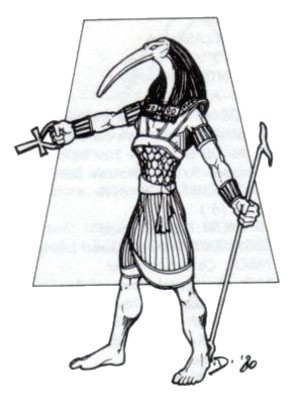
As far as weapons go, elf and half-elf knights quite frequently use long bows outside of siege warfare and tournaments with no stigma attached. Multiclass Wizards are proficient in all the allowed weapons of their additional class. However, when casting arcane spells, they may only have a staff, dagger, or wand/rod in hand. The rationale here is that staves and daggers are "tools" of magic working and are attuned to the wizard and can thus be used to "gesture." Likewise, multiclass clerics or druids may only have the favored weapon of their deity in hand when casting clerical spells. I need to go through and list up the Deities used in 'Toneeze Wurld' (HMA Gareeze Wurld # 162); many are Greyhawk deities but there are some classical ones as well (such as Odhinn and Thoth, for instance).


I think this works out nicely and emulates AD&D with a minimum of fuss. I do not have the C&C CKG, so there might be a similar (or superior) system therein. As stated previously, these are my house rules.

03 June 2011

Remembering Gary

Well, I'm getting ready for game night....it's the new "evil" game (Hackmaster 4E) in which my character is a LE Cavalier devoted to the god Hextor, Herald of Hell and Patron of Tyranny. Tomorrow we're day-tripping to North Texas RPG Con in Dallas, an OSR gaming con.

But it brings to mind Gary. Three years ago when Gary died, my 14 y.o. daughter (11 at the time) did the following pencil sketch:


I think she captured the essence of old school art with this one. It's a shame, though; the scan doesn't do justice to the original.

Tomorrow is also International Gamers Day, so it's very appropriate that we'll be slinging dice tomorrow. Have a great weekend, people. May all your hits be crits.

11 May 2011

Ah, Free Time Abounds


Well, seeing as how I'm going to be unemployed by the end of the week, I should have some free time opening up. I've been thinking about what to do with some of that free time. Part of it will be spent working on my expanded Hommlet campaign and getting it up and running again. And, yes, some time will be spent looking for a job, but that won't start until June; thank you, Rick Perry, for screwing up education in this state. Until the legislature figures out the education budget, all ISDs and state universities and colleges are on a hiring freeze.

Anyway, I'm thinking about making Isungr Games a reality. Maybe working up some OSR modules for Swords and Wizardry, seeing if I can pull off some POD/PDF sales on Lulu. It's not like I'll make a mint or anything, but it's something I can do. And I have a resident artist these days as well. I have an idea for a fane. Now, where did I put those notes?

05 May 2011

On a Quest for Good TV....


Well, I've decided to re-watch the Babylon 5 series. This is, naturally, due to gaming. I'm currently in the process of reading the Stars Without Number RPG, a scifi RPG loosely based on the 0E D&D engine. The game uses the familiar six stats (ST, IN, WS, DX, CN, & CH) as well as HP. There are three classes (Expert, Psychic, Warrior). Experts are, well, experts, usually in technical matters; as a class feature, the player can re-roll a failed skill check once per hour. Psychics are the only class that can use psychic abilities; the way these are arranged remind me of Classic Traveller. The categories are: biopsionics, metapsionics, precognition, telekinesis, telepathy, and teleportation. Warriors get to ignore a hit against them once per melee (they have mad combat skillz!).

Skills are fairly broad in scope and few in number. They rely upon the use of specialties to flesh them out. The skill roll is a simple 2d6 + skill rank (-1 to +4) + attribute modifier (-3 to +3)  against a target number of 6, 8, 9, 11, or 13 based on diffuculty. Skills appear to be there to apply some tension, but not in the "do or die" level of a game like Spacemaster.

Combat looks like it'll be quick and potentially deadly. Kevin Crawford does away with cumbersome charts but his attack roll (d20 based, of course) isn't quite the same as 3.0/3.5's. First of all, AC is still descending, not ascending. To hit, the player rolls 1d20

+ target’s Armor Class
+ attacker’s Combat skill
+ attacker’s attribute modifier
+ attacker’s Attack Bonus

If the total is 20 or greater then the attack hits. A natural roll of 1 always misses, and a natural roll of 20 always hits. Damage is in the standard 1d6 to 2d8 range. Primitive armors are available and still have AC similar in rank to the modern ones. However, TL3+ weapons ignore primitive armors (a nice touch that).

I've only skimmed starship construction and combat. Construction appears to be fairly modular (as is to be expected). Space combat really needs a test run before I can comment. (I've played enough D&D and its variants to make a snap judgement about personal combat!)

What does this have to do with David Warner as a Grail Knight (from the B5 S1 episode "Grail") up there in the lead off picture? Well, the default setting in in A.D. 3200. Human space is recovering from an event called the "Scream" about 600 years ago when a wave of psychic energy came through and either killed the psychics are drove them insane. Humanity had become dependent on the use of psychics in interstellar navigation and civilization fell apart and is only now recovering.

It's seem like the type of place Babylon 5 could have become if the Shadow War had played out differently. That's the feel I get. I think that SWN could emulate B5 quite well, actually. It has that gritty, below decks feel but with a hint of optimism in it. There are hidden secrets that could destroy Humanity or lift us up to the highest levels.


Stars Without Number is available from RPGNow as a free download; it is also available as a POD product in soft- or hardcover. There are also several free (optional) rule add-ons (called "Mandates"), an adventure ("Hard Light") and "Skyward Steel" a supplement that expands naval characters/campaigns.


Also, note that Mongoose Publishing has picked up Stars Without Number for publication so it'll be in the mainstream distribution channels, hopefully by the end of summer/beginning of fall.

03 May 2011

A-to-Z Challenge: Reflections & Plans


Well, I pulled it off. Some of posts where pretty sparse at times (just a monster conversion or a short rant!), but they were there. I tripled my post count in a month, quadrupled my followers, and feel better about writing again. comments are still sparse, but a lot of what I write is not so comment-able. I do read the traffic reports so people are reading. I just hope that people are using and enjoying my few monster conversions for S&W. I purposely chose ones that fit in one paragraph, just like in the Whitebox booklets.

So, what did I learn? Well, I really like how easy it is to convert 1E monsters "down" to 0E/S&W. Quick and easy. Of course, that should surprise me; I converted 3.5 modules like Tomb of Abysthor on the fly for Hackmaster. I also learned that I can write quickly and well if I have the need. But, conversely, I need to watch for those little errors I chide my students on when I do write quickly.

And what are my plans? Well, I do plan on writing 2-3 times a week as the mood strikes me, or even if not. It's about the discipline of writing. To butcher Frank Herbert, "Mood's a thing for cattle or loveplay, not for writing." I do plan on more S&W topics. I need to start a campaign journal for CLD (player) and Guardians of the Polar Bear (DM). I also want to get back to Palladium and V&V as well. So much good stuff out there these days.

Well, it was a fun April and I definitely learned some things. Now, upward and onward.

01 May 2011

Z is for Zombie!


It was a long Saturday, so I'm running a little late on my blog...go figure. But we made it! The final post has arrived.

Zombies. Everybody loves zombies, right? If the series The Walking Dead is any indication, I think that's a resounding "Yes!" Maybe it'll finally do something about the lame-ass vampire craze that's going on. Sparkling vampires...indeed!

I find it someone ironic because the vampires of medieval myth were more like zombies and not suave, urbane aristocrats like the one portrayed in Bram Stoker's Dracula. They did return to their graves, yes, but they also gorged themselves on Blood AND Flesh, in some sort of profane, satanic mockery of Holy Communion. When found, they were undecayed, but they were also described in monstrous terms..."bloated like a tick" is the phrase that springs to mind, even if it's not a direct quote. They were creatures that frequented charnel houses and abattoirs, not Victorian parlors or 1980's discos. Remember this fellow? Not a medieval vampire at all.


Some literary historians point put that the "medieval" vampire (zombie?) is a symbol of the fear of death by disease that was so prevalent. They go on to say that vampires in the Victorian era were symbolic of repressed sexuality and the fear of conditions like syphilis or unmarried pregnancy. Since we're no longer all that afraid of those things (due to abortions, birth control, and antibiotics), we're reverting to something more primal in our fears...death.

Who knows? I'm just a regular historian. I do know that zombies should cause a bit more consternation among players and not just ones with 1st and 2nd level characters who don't have the benefit of a cleric, either. And so, I submit my final monster for the A-to-Z Challenge. Enjoy!


Zombie, Juju

AC: 6 [13]                                   Special: Immune to sleep, charm
HD: 3+12                                    Move: 9
Attacks: Punch or weapon           HDE/XP: 5/240

No one is exactly sure from whence these souless husks come, but they are definitely stronger than the normal zombie. Like standard zombies, they are immune to the effects of sleep, charm, and other mind control spells, They are immune to effects of magic missiles, electricity, and cold; fire only does 1/2 of normal damage (save for 0 damage). Acid and holy water have full effect. They have great strength and whether they use fists or weapons, they cause 2d6 damage per attack; they also attack as 6 HD creatures. They are agile and intelligent enough to hurl javelins or to load and use crossbows. They can climb sheer surfaces easily and are not hampered underwater, either. Only magical weapons (+1 or greater) can affect a juju zombie and even then piercing and crushing weapons have difficulty getting through their tough skin and only do half normal damage (cleaving weapons cause full damage). Finally, juju zombies turn as spectres.

29 April 2011

Y is for Yeti!

A short one today. Lots of work up at the Uni as the semester winds down...more like free lunch for this starving professor! So, enjoy the yeti statted up for Swords and Wizardry Whitebox.


Yeti

AC: 6 [13]                                   Special: Surprise, immune to cold, squeeze
HD: 4+4                                      Move: 15
Attacks: Claws (2)                       HDE/XP: 5/240

Arctic cousins of the lowland Sasquatch, the yeti is almost impossible to spot in the frozen North due to its stealth and natural camouflage. A character has a 5% chance of spotting the yeti for each level of experience above the 1st; thus, a 4th level character has a 15% chance of noticing the yeti before it attacks. If the yeti does manage to surprise the characters, they each must save or be paralyzed for 3 combat rounds as they meet its fearsome gaze. A paralyzed character is automatically struck by the claws and squeeze attack. If the yeti scores a natural 20 on either of its claw attack, it has managed to grapple with the character and automatically does an additional 2d6+4 damage.

28 April 2011

X is for Xenophobia and Xorn!


Well, I noticed that several other bloggers are using xenophobia today; however, there are only so many "x-words" and I had decided that this last night, so here we go!

As a historian, xenophobia has a special significance for me, although the phrase used in the literature is usually "the fear of the Other." All cultures exhibit this fear; "Humans destroy what they fear" is an old saying and frequently reused in literature and cinema such as X-Men. This is not merely confined to European cultures, either. For example, the name that each american Indian tribe used for itself translate as "the People." Other tribes were not really "People." This allowed for fighting between neighbors.

Part of the fear is instinctive; humans are actually fairly conservative creatures fearing change. Also, our minds work in loops that start with observation and move to contemplation. A decision is made and implemented. Confronted with something that was experienced previously (or at least similar to something known), this operation is practically instinctive. Faced with something odd or unique or radically different, fear and indecision set in as we try to cope with new input. The easiest solution is to destroy.

This explains propaganda in warfare. The enemy must appear "unhuman" to effectively convince the populace to kill. It taps into that fear of the other; confront with something different, it is easier, best, safest to kill it.

"What does this have to do with gaming?" you ask. Good question, and I don't really have an answer. I've wracked my brain looking for a connection, maybe something about how parties seem to slaughter orc children all the time or argue about whether it's a LG chore or not. But if one's brain is hardwired to work in this way (and remember that our instincts frequently short circuit and bypass our reason), is it even a moral issue?


Xorn

AC: -2 [21]                                  Special: Surprise, immune to fire/cold
HD: 7+7                                      Move: 9
Attacks: Claws (3), bite                HDE/XP: 9/1100

Xorns are a race that is native to the Elemental Plane of Earth, but they occasionally travel to the deep places of the Prime Material Plane to search for the precious metals that they enjoy as snacks. A xorn is able to adjust its molecules and pass through solid stone as if it were air; it can also do this to attack by surprise (5-in-6) from underneath or out of a solid wall. Its claws do 1d6 damage, but its powerful bite does 4d6 damage! A xorn is also completely immune to fire- or cold-based attacks and takes no more than half damage from electrical attacks (if it saves against an electrical attack, the damage is 0). 

A xorn does have special weakness to some spells. Move earth stuns the xorn for 1 round, in addition to knocking it back 30 feet. Transform stone-flesh or transform rock-mud drops the xorn's AC to 8 for 1 round round and effectively stuns it (losing its next attack) since the xorn must readjust its molecules. A passwall spell causes 11-20 damage.

Fortunately for most adventurers, xorn are relatively peaceful. They will merely demand a "tribute" of precious metals (copper, silver, gold, etc.) from any groups they encounter and will then allow the party to pass on without incident. Note that they can smell precious metals from 20 feet away, so the party can't lie about what metals they have.

27 April 2011

W is for "Woot!" and Water Weird


Woot! 

"Woot!" is the "Hoody hoo!" heard at my gaming tables. As both a player and a DM, I LOVE woot-moments. For us they usually occur whenever we pull off a great moment. You know the one. You have this elaborate, by-the-numbers "Dirty Dozen" scheme all planned out. It's not quite working. Every one is on the edge of their seats and then...it happens! The scheme is pulled off and everyone makes it out alive and richer than Croesus. And someone, sometimes everyone, lets out a raucous "WOOT!!!"

A perfect example of a "Woot" game: Father Jupiter Smiles On Us Pt. I

Or an example with my kids:  And Second Session
especially with the fight that begins at:

"Once again they slaughtered the little horrors. They opened the doors to go down the corridor and, at the next intersection, a goblin patrol!" 

It's these "woot" moments that make the game better than a computer game, even an MMO. It's that human element where everyone connects emotionally and in person at a real table, face-to-face. For me, this is gaming and this is why I continue gaming even after 30 years. Once again, I have to say, thank you, Gary, Dave, and Bob.


Water Weird

AC: 4 [15]                                   Special: 1 pt. from sharp, 1/2 or 0 from fire
HD: 3+3                                      Move: 12
Attacks: Drowning                       HDE/XP: 5/240

These is a strange lifeform from the Elemental Plane of Water that occasionally hides in fountains or pools; in general, they cannot be destroyed and loss of all hit points merely disrupts their forms and they re-form with full hit points in two rounds. Sharp weapons do a mere 1 point of damage; blunt weapons do full damage. Fire spells automatically do 1/2 damage or 0 if the water weird saves. A purify food and drink spell destroys it immediately. It attacks as a 6 HD creature and a struck target will be dragged into the water and begin to take drowning damage on the next round and every round thereafter (1d6/round). Water weirds have a 3-in-6 chance of successfully controlling a water elemental.

25 April 2011

U is for Uniformity and Umber Hulk


Uniformity. In the Dungeon Masters Guide (p. 7), Gary states, "Dictums are given for the sake of the game only, for if ADVANCED DUNGEONS & DRAGONS is to survive and grow, it must have some degree of uniformity, a familiarity of method and procedure from campaign to campaign within the whole." In my opinion that's part of the problem with the OSR movement. Everybody seems to want to come out with their version ("vision") of the old rulesets. If  Labyrinth Lord  is adequate, what need is there for Swords and Wizardry, Complete, Whitebox or other?  If B/X Companion rounds off Moldvey, why even bother with  Dark Dungeons (yes, I know, DD is a BECMI emulator)? Or, ultimately, with so many copies of the original rules on Ebay or even pdfs (mostly pirated, admittedly) why even bother with "clones" at all?

This is not to disparage any of the "clones." It is clear that the authors all have an excellent grasp of the system and the material. But they're all slightly different and not ~exactly~ compatible. As Gary goes on to say on the same page, "ADVANCED D&D is more than a framework around which individual DMs construct their respective milieux, it is above all a set of boundaries for all of the 'worlds' devised by referees everywhere. These boundaries are broad and spacious, and there are numerous areas where they are so vague and amorphous as to make them nearly nonexistent, but they are there nonetheless."

I probably worry for nothing, but I am concerned that the movement will  subdivide into a group of mutually antagonist people. Feel free to prove me wrong.


Umber Hulk

AC: 2 [17]                                   Special: Confusion
HD: 8+8                                      Move: 6/1-6 (when burrowing)
Attacks: Claws, bite                   HDE/XP: 9/1100


Despite their lumbering, beetle-like appearance, Umber Hulks are actually an intelligent subterranean race that culls ankhegs, cave fishers, hook horrors, young purple worms, and the like for food. Their exoskeleton protects them better than plate armor and their large mandibles can cut through armor for 2d6 damage. Anyone who meets the gaze of the Umber Hulk must save or become confused for 2d6 melee rounds.


23 April 2011

T is for Tekumel and Two-Headed Troll


Ah, Tekumel. One of the earliest campaign worlds. And one of the most detailed. And also, one of the few that's not Tolkien- or European-derived. I must confess, I've only, in 30 years of gaming, only played in Tekumel once, using the old EPT rules. But I have devoured everything I can about this world.

Imagine a world where metal is a scarce item. So, all weapons, armor, etc., are made from chlen-hide. Imagine a beast like a giant buffalo that can be "sheared" periodically of its hide. There are no horses or other beasts of burden, and chlen are too slow to be used as such. Porters travel on a triple-tiered highway system.

The land is ruled by a strict caste system that is also part of a clan system. There are 12 gods each with a "cohort," a minor deity or demigod in its service. So, 24 immortals essentially. Half are gods of order, half are gods of chaos. They are not good or evil per se. There is merely correct and incorrect behavior.

This is an alien world, settled in the far future by humans after recovery from a nuclear war. The world, however, eventually feel through a wormhole into a pocket dimension, cut off from the rest of reality. Aliens allies and enemies were also trapped on the planet as well. And the native life is high inimical to human life. The climate is a very hot tropical, and further changed human society..

There have been 4 different "official" rulesets for Tekumel, none currently in print, plus a host of fan-created ones for GURPS, Hero, etc.

The best primer on Tekumel is at the offical site: http://www.tekumel.com I could ramble on forever, but check it out. It's worth your time.


Troll, Giant Two-Headed

AC: 4 [15]                                   Special: Regeneration
HD: 10                                        Move: 12
Attacks: Claws, bites                   HDE/XP: 12/2000

Some deranged wizard caused an unholy union between an ettin and a troll, resulted in these two-headed monstrosity that combines elements of the two. The two-Headed troll can attack up to four targets in a round: 2 separate claw attacks (1d6+1 each) and two bite attacks (2d6 each). They are only surprised on 1-in-6 chance and regenerate as trolls (q.v.) but only at a rate of 1 h.p. per round.