Showing posts with label SciFi Monday. Show all posts

15 July 2013

Sci-Fi Monday: A DCC Campaign Idea

"Wait!" I hear you all exclaim, "The Dungeon Crawl Classic RPG is fantasy not science fiction!"
 
Au contaire! And allow to enlighten you as to why. First of all, DCC has laser guns and hi-tech "stuff' in it. And this is quite acceptable; think of Arneson's Blackmoor and Bledsaw's Wilderlands, and yes, even Gygax's Barrier Peaks. All had some ray guns and fallen ancient civilizations. Vance's Dying Earth, anyone? Saberhagen's Empire of the East? It's a trope that has legs in the sci-fi genre. And one I'm willing to exploit for my game. This brings us to the second reason: I'm converting a setting.
 
As I have stated many, many, many times in the past, I started gaming with 1st edition Gamma World. The greatest linear-adventure-combined-with-sandboxy-goodness is GW1 The Legion of Gold by Gary. For all genres and games. Ever. Yes, there is a linear four act plot, but there is also a wealth of background and setting material for the Barony of Horn and its environs. Even after the threat of the Legion of Gold is ended, there is plenty to do in the area. Factions, while not detailed, are hinted at. The university is an enclave of the Restorationists who despise the feudal trappings of the barony but happily take the baron's money. The Baron has knights who are attended by squires who carry the knight's laser weapon for him. The Baron has an armory and a garage, oh, and by the way, it's rumored that his family is really mutant in nature and have gnarly mental powers. Mutants may only enter teh cit through the farmer's gate. Lairs of tribes, family units, and individual creatures are numbered and placed on the campaign map but, again, other than stats and a couple of lines of notes, no detail is given. The whole campaign setting (because that's what it really is, in module form) is perfect for fleshing out. this is B2 The Keep on the Borderlands but polished and refined.
 
So, how does this setting work for DCC? Well, I already know that it needs work to convert. And, naturually, there will be some stylistic differences...I have to downplay the tech and add the mystical. but I have a skeleton, a framework with which to play. At the very least, it's an idea to play with: DCC in the Gamma World. Maybe.

08 July 2013

Sci-Fi Monday: Cleburne (Alternate Timeline for GURPS Time Travel)

Dixie 14 (aka Cleburne)
 
 
There are, not surprisingly, close to a score of known parallels classified as "Dixie" worlds, that is, realities in which the Confederacy won the American Civil War. On the clear majority of these parallels, the South holds strong to ideals of racial supremacy accepting chattel slavery and even adapting it to the Industrial age for slave labor in factories rather than agrarian pursuits. However, on at least one known parallel, history took a different course; that world is nicknamed "Cleburne" to distinguish it from the other Dixies.
 
Map taken from http://jakarnilson.webs.com/mogdonazia/battle2.htm and used without permission.
 
In our world, Major General Patrick R. Cleburne, CSA, hosted a meeting in which he pointed out the many obstacles the South had to overcome to win the war, even at that late date. The one deficiency the South could address was the manpower issue. Cleburne proposed that slaves who would fight for the Confederacy would be emancipated. As he wrote in a letter dated 02 JAN 1864:
 
 "Will the slaves fight? The helots of Sparta stood their masters good stead in battle. In the great sea fight of Lepanto where the Christians checked forever the spread of Mohammedanism over Europe, the galley slaves of portions of the fleet were promised freedom, and called on to fight at a critical moment of the battle. They fought well, and civilization owes much to those brave galley slaves. The negro slaves of Saint Domingo, fighting for freedom, defeated their white masters and the French troops sent against them. The negro slaves of Jamaica revolted, and under the name of Maroons held the mountains against their masters for 150 years; and the experience of this war has been so far that half-trained negroes have fought as bravely as many other half-trained Yankees. If, contrary to the training of a lifetime, they can be made to face and fight bravely against their former masters, how much more probable is it that with the allurement of a higher reward, and led by those masters, they would submit to discipline and face dangers."
 
His proposal was greeted with polite silence and nothimg ever came of it. Cleburne himself would die leading a gallant charge at the Battle of Franklin on 30 NOV 1864.

Patrick R. Cleburne, Savior of the Confederacy

On the world of Cleburne, however, the proposal was met with a more reasoned response and was implemented. There was some immediate resistance and protests made, but as the war progressed, the advantages began to take their toll on the nay-sayers. One of the first responses was the recognition of the CSA by the United Kingdom (and later France). While Britain would not directly aid the South with ground troops, the British navy made short work of the Union blockade allowing the resupply of the Confederacy with war materials. The British diplomatic corps went to work urging the two nations to come to an accord.
 
On the battlefront, the new freeman of the South made their presence known within months. Grant's Wilderness Campaign and Sherman's Atlanta Campaign were both slowed down due to the influx of black troops. In the Confederate Army, black units were greeted with some skepticism and even outright derision and hostility. However, troops who had fought against units such as the 54th Massachusetts were more than willing to give them a chance and that warrior bond common to all who share hardships would make for some interesting post-war politics.
 
The US Presidential election of 1864 would see McClellan winning over Lincoln in a very close race. By spring, 1865, the Union would come to the peace table and offer generous terms for the cessation of hostilities. A return to prewar borders became a reality (with the notable exception of West Virginia). Kentucky opted for the Union, Tennessee for the Confederacy. Missouri went with the South and Kansas with the North. The Indian Territory would remain a bone of contention for some  years to come; the South sided with their Cherokee allies for its "independence." It would eventually become reality as well in 1907. As far as the western states, the USA ceded the area that is Arizona and New Mexico in our world to the CSA. In the late 1860's, Maximilian I ceded Sonora and Baja California to the Confederacy in exchange for military backing against Benitio Juarez. The CSA, like the USA, stretched from sea to sea. The New West would see a large number of black settlers escaping racial tensions in the Old South.
 
And make no mistake, things were not all sunshine and happiness in the CSA. This would come to a head in the 1878 Presidential election when Cleburne ran on the Whig ticket against Nathan Bedford Forrest on the Democratic ticket. Relations with the USA would remain frosty; there were some areas where the two worked together well such as the postwar cattle drives that sold Texas beeves to Kansas markets for consumption in Northern cities. However, it would take the First and Second World Wars for the two nations to warm up to each other once again. By the 1980's (current year is 1987), there was even talk of reuniting, but such is really wishful thinking of some starry-eyed dreamers. However, the two are staunch allies in the fight against Global Communism.
 
*****
 
Yes, there is some hand-waving there, but all-in-all, it makes for an interesting setting. Turn the tropes on their heads. With the Indian Territory and the New West, there's plenty of space to make for a different western-themed game. WW2 intrigue is possible. For instance, the German-American Bund really didn't cause problems in our world; what if they did for the CSA? What if the south still had close ties with France; would Dien Bien Phu turn out differently? So much to think about and try.
 
Anyway, until next time, gentle readers, whistle Dixie!

01 July 2013

Sci-Fi Monday: Star Wars Volturnus Campaign (d20)


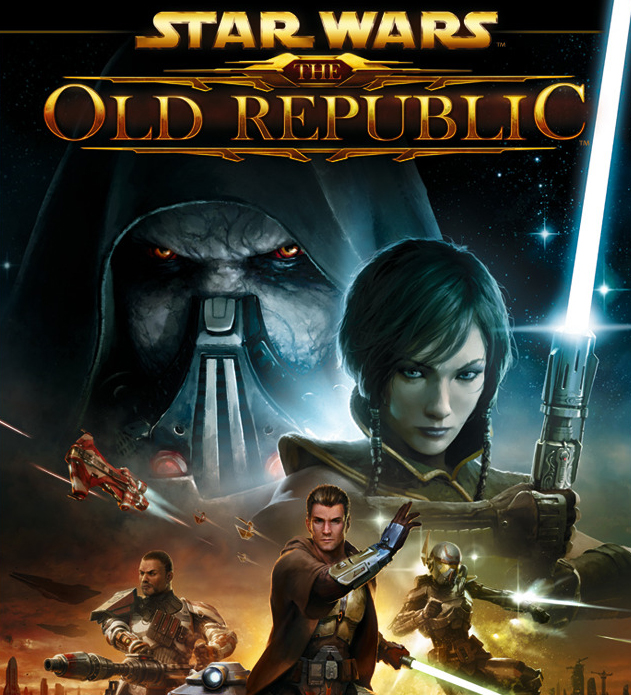
Well, after much soul-searching and reflection, I decided the Star Wars campaign will be d20. So, this weekend, initial planning and character creation began. The timeframe is the Old Republic, set in roughly the same time as the MMO, just before the breakout of hostilities between the Republic and the Sith Empire. The Jedi Council is entrenched on Tython and is sending an expedition to the newly-(re-)discovered world of Volturnus. A previous scouting expedition has not reported in and the council has not reestablished contact. Therefore, in truly dense Jedi fashion, another team is being sent to investigate. As to the location of Volturnus, I'm thinking somewhere between the Hydian Way and the Perlemian Trade Route, in the vague vicinity of Korriban-Yavin-Wayland (which is still a HUGE area).
 
I don't have a problem with characters starting out at high level; it makes the game more fun and more like the movies. Character level at start is 9. I'm using Mad Irishman's fillable character sheet. Characters to date:


Sgt. Kane "Bane" Deathchant (played by Will), Soldier 6/Elite Trooper 3. On detached duty from the Black Lion Squad (Republic Special Forces), Bane's role is military advisor to the expedition. One interesting thing to note is that I have adapted the shield rules from Saga Edition's Knights of the Old Republic Guide for d20 use. Heavy shields are DR 15, 10 for medium, 5 for light. They're powered up as a free action and last for the combat period; any damage over 15 collapses the shield which cannot be used again in the current encounter. One power cell allows 5 power-ups, whether or not the shield collapses. Crits manage to bypass the shield. Not sure how over-powered it is yet, but I'd rather not kill everyone outright. Surprisingly enough, my son did not want to play a Jedi. His character sheet is found here.


Chamurra (played by my wife, Beth), Scout 8/Bounty Hunter 1. Chamurra is a Wookiee scout who has recently taken up the mantle of bounty hunter. She has worked with both the Jedi and the Republic Armed Forces before. Chamurra has joined the expedition as additional military support; she also believes that the Star Devils pirate gang is based somewhere in the area. Definitely a bounty worth checking  into. Her character sheet is found here.
 
Daughter #1 (Kat) isn't sure yet. Daughter #2 (Rene') is thinking about a Jedi of some sort. We'll finalize that this week.
 
I am looking forward to running this game. As play progresses, we'll see who the bigger enemy is: the Star Devils or the Sith. That big battle in SF2 Starspawn of Volturnus might not happen; the plan is that the Sith Empire sends a force to find some Sith artifact or something. But the players might not go that route; it might culminate into a fight with the Star Devil and his pirates. Of course, creatures like the Quickdeath will be Sith creations from long ago, but the Sith Empire does not have to show up.
 
As an aside, none of the art used in this blog is my own, but was garnered from a variety of places on the net. I make no claim to ownership or creation of said art, and am merely using in my own private game.
 
Until next time, gentle readers, may the Force set you free!

24 June 2013

Sci-Fi Monday: Dimensional Travel & GURPS


Dimensional travel. The idea that for every choice, two or more different worlds are created. There are some who say that time travel is unfeasible, but switching dimensions could well be within the realm of possibility. It's a favorite them in sci-fi literature whether it is true dimensional travel, a "what if?" story, or a combination of the two, as in Harry Turtledove's Guns of the South. There are myriad short stories and novels that are widely read and enjoyed. With Steve Jackson's GURPS as the premiere multi-genre RPG, it was only natural that the game look into this area. Way back in third edition, the Infinite Worlds setting was one of several campaigns featured in the GURPS Time Travel book. With fourth edition, the campaign gained it's own title book.
 
 
The basic premise of the setting is that dimensional travel was discovered in the early 21st century by a pair of scientists. It is now the mid 21st century and the UN has oversight of the project. Thus far, only one other world is known to have dimensional travel technology. However, their dimension is on a different "quantum level" than ours and they cannot reach "Earth Prime" directly. However, Earth Prime frequently has conflicts with them in the "grey zones." I'm not going into a indepth discussion of the quantum levels an how they work--suffice to say that history can be altered in these other world and push them up or down in level. Thus, a world could be made unreachable to Earth Prime by a shift.
 
There are literally an infinite number of Earths out there. Some are relatively benign and ripe for exploitation. For instance, there are "Eden" worlds were man never developed and thus available for colonization (as in the failed television series Terra Nova) or harvesting of natural resources. There are the 'Reich worlds" where the Axis powers won WW2. Most are technologically stagnant or have even developed in to a hell world (q.v.) after Japan and Germany squared off with nuclear weapons. At least one, Reich 5, is on a par with Earth Prime in technology; they do not have dimensional travel and we hope they never do! (Not quite true; but the main Nazi hierarchy does not  have the knowledge.) Visions of a more lethal trans-dimensional Iron Sky come to mind. There are "hell worlds" where a nuclear war or some other catastrophe wipe out civilization. In my own games, I coined the term "Romero worlds" for one that have undergone a zombie apocalypse! there are literally hundreds of possible worlds!


One campaign I've always wanted to run is based not on the UN's Infinity Patrol but based instead around the U.S. government's "Worldgate Project' buried deep in Cheyenne Mountain. Sound familiar? Now, while the UN does have oversight of dimensional travel, several governments have access to conveyors. Supposedly, nothing occurs with UN oversight, but we all know how tricky governments like the U.S., Russia, Japan, and even the UK can be (Torchwood Project, anyone?). So, I have some ideas about the U.S. finding some worlds and keeping them secret from the U.N. Possibly coming into conflict with the Reich 5 Ahnenerbe plot, working to bring about civil rights on a Dixie world or two, that sort of thing. And all the while trying to keep clear of the Infinity Patrol!
 
Another interesting idea in the Infinite Worlds setting is that it is possible to have (alternate) figures from history recruited into the organization. And, since the worlds move at different relative speeds, it s possible to have say, Niccolo Machiavelli as an agent. This allows an out of place place, out of time character like Teal'c from Stargate: SG-1. I did start this game once, but it fell apart before the first session. I had one player create a police officer and his K-9 partner recruited from a Romero world who had survived for several months after the Rise. I was really looking forward to that characterization in play.
 
 
All-in-all, the fun comes from creating new worlds that SJG has not published yet while playing with all those tropes and changing them up.What about a world where things went badly for the U.S. in the Pacific and. while Germany is defeated, the Empire of Japan and the U.S. sign an armistice? A Dixie-world where slaves who would fight for the Confederacy were freed leading to full civil rights for blacks in the 1920's; meanwhile, in the defeated North, blacks are despised and persecuted and the U.S. embraces communism in the 1910's. Conflict galore in that one. It's all about playing with history and seeing how players react; and it's fun, creative fun.
 
Until next time, gentle readers, think of the possibilities!


10 June 2013

SciFi Monday: The Perils of Star Wars Gaming


I'm back. I'm still slightly depressed over my grandmother's death and my father's illness, but I have to go on. I can't put everything on hold forever.
 
That said, SciFi Monday brings you my plans for a Star Wars campaign I want to run with my family. The oldest is undecided; number two is thinking a Jedi; the boy is all for a trooper; and Beth (wife) will probably play a Wookiee scout/bounty hunter. I'm pulling one I did back in the 1990s and adapting TSR's Volturnus trilogy (for Star Frontiers) for the Star Wars Universe. However, this is set in the Old Republic era (back in the day, it was, of course, set in the Rebellion Era--options are good things!). The Sathar become the Sith Empire, monstrosities like the quickdeath are creations of Sith sorcery, the Frontier is really the Republic, Volturnus is a lost world fought over by the Sith and Jedi a millenia ago, etc., etc., ad infinitium, as nauseam.


We have a timeframe, we have a campaign, and now we have too many choices as far as systems are concerned. Let's enumerate, shall we?


WEG's Star Wars 2nd Edition Revised & Expanded is an old favorite of mine. I bought first edition when it was published and upgraded over the years. I post infrequently on the Rancor Pit Forums as Darth Kjeran and really do love this system. It is quick and fun and not overly complex. The mechanics really allow the players to attempt the type of cinematic action seen in the movies. Death can occur, but one really has to flub it up Big Time to do so. The downside is that force users are all-powerful. Although I do plan on starting the players out as experienced veterans, there is a large disparity between Jedi and EVERYONE ELSE. And I do have at least one player wanting to play a Jedi.


Our next contender is WotC's Star Wars d20 Revised. This one receives much in the way of  criticism from fans for "not feeling like Star Wars." There might be some validity to that viewpoint; however, the d20/3.5 systems works better for science-fiction than it does for fantasy. One of its most important attributes is that of balance. A 7th level Soldier/2nd level Bounty Hunter has a pretty fair shot at taking down a 6th level Jedi Consular/2 level Jedi Investigator/1st level Jedi Master. Now, there are those who still feel that Jedi should be the power gods that WEG made them. However, I read Expanded Universe fiction quite often and Jedi are NOT invincible. Order 66, anyone? Plus, that Soldier/Bounty Hunter is a 9th level character--he should have a chance to go toe-to-toe with a Jedi (or Sith). Cons? Well, as referenced above, multiclassing can get silly, but it does have the effect of recreating some of the iconic roles in the movie in a manner different from that of WEG (which proposes an almost generalist feel with the exception of Jedi characters). Some would add hit the HP mechanic, but the way Star Wars d20 handles wounds makes that a non-issue for me. Also, there is a Old Republic campaign guide that was published for the SAGA/3rd edition of the rules. Very useful.


Next up is the fan-produced Star Wars Galactic Adventures RPG that was forced off of the net. I believe it was in its 6th or 7th revision. I prefer 1.4 due to its art and layout. In mechanics, it is very similar to 0e D&D or Stars Without Number. There are 9 professions (classes) and 23 races plus the optional "race" of droid; it's also a modest 89 pages in pdf. Note that the race descriptions are only a paragraph in size (with the exception of droids who get a full page!). Combat mechanics are similar to Gamma World 1st Edition in that the to hit number is based on type of weapon versus armour type. Skills are handled by d100 rolls on tables similar to AD&D thief tables. There is a three alignment system (Good, Fair, and Evil) that actually fits the milieu nicely. It's a quick, easy game that I am leaning towards using just because of its simplicity.

The last game is also at the bottom of the list. Fantasy Flight's Star Wars Edge of Empire. It's not out yet; July supposedly. I could, of course, pick up the starter game or one of the beta rule books on Ebay. From what I have gathered by reviews, blogs, and vlogs, the game uses a dice pool mechanic (and special dice, of course!) where dice are added by the player and the GM. It looks easy, but that is never the case; it might, however, be extremely elegant. So, it should facilitate cinematic play. The other problem is that Edge of Empire deals with, well, scoundrels to put it bluntly. There are 2 other books planned in the system, one to detail Jedi/Sith and one for Empire/Rebellion (i.e., trooper/military types). There is supposed to be rudimentary Force rules in EoE, but I don't know that for certain. I do know I'll pick this up when it comes out, game whore that I am.

So, there we are. I'm leaning heavily toward SWGA, but I have a plethora of material for both WEG and d20. I just know that I want to run some star Wars; SWTOR is fun and all, but I want to be in charge of the sandbox for a change. :)

Until next time, gentle readers, may the Force be with you!


13 May 2013

Sci-Fi Monday: I'm a Glitter Boy!


Just so you know, I'm a glitter boy! Or, I guess to be more precise, my grandson will be. Back a few years ago when he was getting the revision of Rifts Sourcebook One together, Kevin Siembieda was going through the infamous "Crisis of Treachery." A longtime employee of Palladium Books had embezzled and stolen somewhere in the neighborhood of anywhere from a quarter to a half of a MILLION dollars in money and goods from the company. Palladium fans rallied around Kevin to help him out and, a longtime Palladium fan myself, I threw my support behind the company. apparently Kevin noticed because he sent me an email wanted to know what I though about SB1 when it was published.
 
Apparently a certain NEMA general had a division's worth of troops put in deep freeze, awaiting the day when they could be awoken and go on to rebuild North America. He gave a rallying speech which would give hope to untold generations to come. That general was Anthony Emmel. :) So, apparently my grandson will be a glitter boy pilot and a general. And named after me as well! I'm so proud!
 
And that, gentle readers , is my one clain to sci-fi fame.

06 May 2013

SciFi Monday: Dune, the Movies


The novel Dune by the late Frank Herbert has been an obsession with me for over three decades now. I first discovered it in my local library with the above cover. That was in 1981 at the age of 11. Since then, I have read Dune faithfully at least once a year. So, I have read it a minimum of 31 times and probably closer to 45-50. This is "The" SciFi novel. What i find truly amazing is that even after reading it for so long, every time I read it, I can find something new, some layer or nuance that I have not seen or considered before. And I am not alone in that.
 
With such a large following, public media treatment of it was inevitable. The Avalon Hill board game is tremendous fun. There were several different computer games over the years. There was an attempt at a tabletop RPG by Last Unicorn Games that fell flat when WotC acquired LUG in a vain attempt to seize the Star Trek RPG license for themselves (they had Star Wars at the time as well). Both Paramount and the Herbert Estate utilized a "safety clause" in their licensing agreements to deny WotC the transfer of license. Incidentally, if you can somehow find a copy of Dune: Chronicles of the Imperium RPG--Ahoy, me mateys! ;) Ahem.--do so. Of course, the number of limited print copies go for upwards of $250 last I checked. It was, of course, inevitable that Dune receive a film treatment.
 
And here is where fans split as often seems to be inevitable. I sometimes wonder if all fans are really Southern Baptists they fracture so often. There was the 1984 theatrical release realized by David Lynch and then there are two miniseries, Dune and Children of Dune released in miniseries format by the SciFi Network (2000 and 2003). I refuse to take sides. Both treatments have areas in them that match my mental image of the Dune Universe. I so wish I could mix and match!
 
I will say this about the fan-boys, though, before I delve into the two: it disturbs me when they say that the theatrical movie is completely horrible and has nothing to do with the universe as encapsulated in the novel. I invoke the magic word POPPYCOCK! Frank Herbert worked with David Lynch closely on the production of the 1984 film and, as he said at the time in an interview, of course it does not match the book precisely. In a visual medium, the metaphors one must use are different than the ones used in prose.
 
I could, of course, write an entire book on the two, but I shall suffice by examining one of the prime characters in the universe: the Baron Vladimir Harkonnen.
 
Dune (1984), Kenneth McMillan
In the 1984 film, the Baron is portrayed by Kenneth McMillan as an obese man with some really nasty sores that one assumes are venereal in nature. He has a penchant for lovely young boys that he likes to kill and is enamored of his nephew Feyd-Rautha (portrayed by Sting). There is the addition of the heart plugs, definitely a departure from the novels. The baron himself is, to not mince words,bat-shit crazy. He's completely obsessed with power and its acquisition and is completely over the top in almost every aspect of his nature. How does this mesh with the novels?
 
First, his appearance. The baron in the novels is obesely overweight, probably even more than portrayed in the film. Both use an anti-gravity harness to move; the movie baron does it for fun and image; the novel baron has to have the repulsors to move. So, mark this one down to trying to stay within the limits of human physiology. As for the sores, while not mentioned in the novel, it is mentioned that the baron "sampled many pleasures in his youth" and is most assuredly a hedonist. Showing him with these disgusting sores is a simple way to portray it and to shows us that his vices know no limits. same with the "snuff" scene. The novel baron is infatuated with Feyd and conceives an elaborate plot to have him reclaim Dune as the Messiah of the Freman and he even sets his sight on the imperial throne as well.
 
Now on to the heart of the matter. The heart plugs. Major addition. However, remember what Frank Herbert said about the visual medium needing a different set of metaphors? As Plinkett points out in his excellent Episode I review, the opening scene in Star Wars: A New Hope tells the audience everything about the political situation between the Empire and the rebels visually. That's what the heartplug is. It's a visual symbol of the power that House Harkonnen holds over its members....even the baron. One's life can literally end with a simple tug. No one is immune. Looking at the soldiers and Feyd and Rabban's costumes, one can assume that active soldiers have theirs covered. As for the baron not covering his, that's a symbol of his hubris, his overwhelming pride. No one can touch him; he's not afraid at all. Overall, this baron is more psychotic than evil.
 
 
Frank Herbert's Dune (2000), Ian McNiece
Bring in Ian McNiece from the 2000 and 2003 treatments. I would say that this baron follows the book closer. still obese (but not more morbidly so) and still a "floating fat man." The forehead rub/gesture he uses is documented in the novels and used appropriately in the Children of Dune miniseries. He's more suave and silky, a nice, yet still ruthless, evil. His voice is oily and calming not the harsh, frantic bark of McMillan's baron. this baron does not use a sledgehammer to show his evil; he's more smooth than that.
 
Of the two, I have to lean slightly toward McNiece's portrayal. I enjoy the heck out of both but Ian is far more subtle. And, in the real world, isn't that how evil usually is?